

Test Scope
High-voltage leak detection allows for the non-invasive and non-destructive identification of infiltration points in waterproofing membranes. The test is performed “dry” on-site, without the need to wet the surfaces.
Test Method
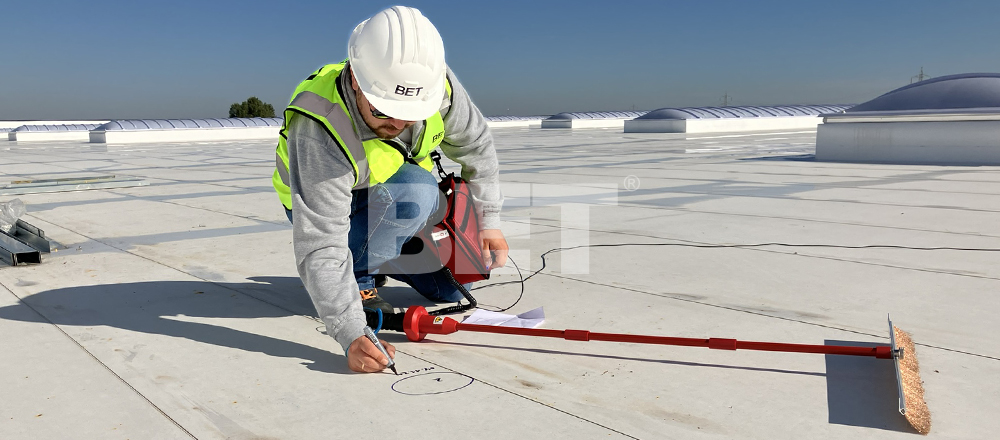
We perform electronic leak detection on roofs using the arc testing technique. One terminal of a portable voltage generator is connected to the concrete or metal structure of the roof. The generator injects high voltage but low current into the system, ensuring maximum safety during the execution of the test.
The other terminal of the generator is connected to a specific electrode made of highly conductive bristles, which is used to test the entire surface. Contact between the bristles and any breaches in the waterproofing membrane creates a current flow, closing the circuit and pinpointing the leak.

Standards
We perform electronic leak detection on roofs according to the following standards:
ASTM D7877-14 – Standard guide for electronic methods for detecting and locating leaks in waterproof membranes.
ASTM D6747 – Standard guide for selection of techniques for electrical leak location of leaks in Geomembranes.
NACE SP 0188-2006 – Discontinuity (holiday) testing of new protective coatings on conductive substrates.
Applications
We perform high-voltage leak detection on flat surfaces made with electrically non-conductive waterproof membranes:
Flat roofing systems (excluding metal-coated EPDM membranes)
Coping stones and parapets
Green roofs (prior to the installation of the vegetation layer)
Walkable coverings for parking lots and underground rooms
Geo-membranes